

27 Oct Commercial Caulking and Sealant Failure in Indianapolis, IN: Signs Your Building Needs Repairs
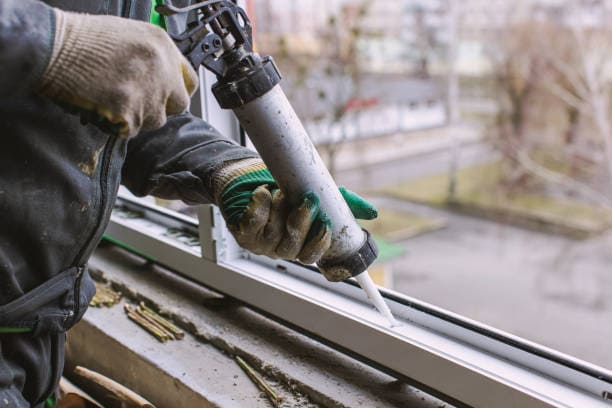
A small crack around a window might not seem like a major concern when you’re managing an entire commercial property. However, when the next Indiana rainstorm rolls through and water starts appearing on an interior wall, that seemingly minor defect suddenly becomes a much bigger problem. For commercial building owners and facility managers throughout Indianapolis, deteriorating exterior sealants are one of the potential sources of moisture intrusion that shouldn’t be overlooked.
Commercial caulking and sealant systems help protect buildings by closing gaps around windows, wall panels, expansion joints, and connections between different construction materials. Over time, weather exposure, building movement, and natural aging can compromise these protective barriers, allowing moisture to enter places it shouldn’t.
Fortunately, recognizing the early warning signs can help property owners address problems before additional damage develops.
Some common indicators of commercial sealant failure include:
- Cracked or shrinking caulking: Visible gaps can develop as sealant materials age and lose flexibility.
- Peeling or separated sealants: Caulking that pulls away from surrounding materials may no longer provide an effective weather seal.
- Water intrusion: Leaks around windows, wall panels, and exterior joints may indicate deteriorated sealants or related building-envelope defects.
- Failed expansion joints: Damaged joint systems can allow moisture into areas designed to accommodate structural movement.
- Interior moisture damage: Water stains, damp drywall, and damaged finishes may indicate that moisture has travelled through the exterior wall assembly.
At Knauss Property Services, we’ve helped commercial and industrial property owners throughout Indianapolis and Central Indiana address exterior building maintenance and waterproofing concerns since 1991. Our services include commercial waterproofing, leak investigation, expansion joint systems, sealant applications, and building-envelope repairs.
What Causes Commercial Caulking and Sealants to Fail?
Commercial caulking and sealants fail when aging, environmental exposure, building movement, or installation problems compromise their ability to maintain a flexible, watertight connection. In Indianapolis, seasonal temperature changes and repeated exposure to rain, snow, sunlight, and freezing conditions can place considerable stress on exterior joint systems.
Aging and UV Exposure
Exterior sealants are constantly exposed to sunlight, moisture, and changing temperatures. Over time, some materials become less flexible, develop surface cracks, or begin separating from adjacent building components.
Sealants installed around storefront windows, metal wall panels, and masonry joints may deteriorate at different rates depending on the material and exposure conditions.
Building Movement and Temperature Changes
Commercial buildings naturally move as temperatures rise and fall. Concrete, masonry, glass, and metal expand and contract differently, which means the sealants connecting these materials must accommodate movement without losing adhesion.
Indianapolis experiences hot summers and cold winters, creating repeated expansion and contraction cycles. When a sealant lacks sufficient movement capability or has reached the end of its useful service life, cracks and separation can develop.
Improper Installation or Material Selection
Even relatively new caulking can fail when the wrong product is used or the joint wasn’t properly prepared. Installing sealant over dirt, moisture, deteriorated material, or incompatible surfaces can prevent proper adhesion.
Joint design also matters. If the sealant is applied at the wrong depth or bonded to surfaces that should remain free to move, it may experience excessive stress and premature failure.
Warning Signs Your Commercial Building Needs Sealant Replacement
Commercial building sealant replacement may be necessary when caulking shows visible deterioration, separates from surrounding materials, or no longer prevents water from entering vulnerable joints. Recognizing these signs early helps Indianapolis facility managers identify areas requiring professional evaluation.
Cracked, Shrinking, or Peeling Sealants
One of the most recognizable warning signs is caulking that appears cracked, brittle, or noticeably smaller than the joint it was installed to fill. In some cases, the material may peel away from the building surface or leave visible openings.
These conditions are particularly important around windows, doors, masonry transitions, and metal panels exposed to wind-driven rain.
Water Leaks Around Windows and Wall Panels
Water appearing around interior window frames or beneath exterior wall panels may indicate a failed sealant connection. However, the visible leak location isn’t always where the water entered the building.
For example, moisture entering through an upper-floor joint may travel behind the façade before appearing near a lower window. This is why window wall leak repair often requires investigating multiple possible entry points rather than simply sealing the most obvious opening.
Recurring Interior Water Stains
Ceiling stains, damp drywall, bubbling paint, and discoloured interior finishes can indicate moisture intrusion. If these symptoms return after heavy rain, the building may have an unresolved exterior waterproofing problem.
Commercial property managers should document when leaks occur and whether they’re associated with wind direction, rainfall intensity, or specific weather conditions. These observations can help guide a professional investigation.
Why Failed Expansion Joints Are a Serious Concern
Failed expansion joints can create moisture entry points where commercial building sections are designed to move independently. These joints are common in concrete structures, parking facilities, exterior walls, and transitions between building materials, making proper expansion joint repair essential when deterioration develops.
Unlike a simple stationary gap, an expansion joint must accommodate predictable structural movement. A sealant that’s too rigid, incorrectly installed, or incompatible with the joint design may crack or separate as the building moves.
Consider a parking structure in downtown Indianapolis. If an expansion joint begins leaking, water containing winter deicing salts may reach vulnerable concrete and reinforcing materials.
Over time, moisture and chloride exposure can contribute to reinforcement corrosion and concrete deterioration. While not every failed joint creates structural damage, recurring leaks deserve prompt investigation.
Our commercial waterproofing services include expansion joint systems and sealant applications designed around the needs of commercial structures. We evaluate the affected areas and consider appropriate repair options based on the joint configuration and surrounding conditions.
Why Applying New Caulk Over Old Sealant Usually Isn’t Enough
Applying new caulk directly over deteriorated sealant often fails because the underlying material may be loose, contaminated, incompatible, or unable to support a reliable bond. Although this approach can appear to close a visible opening, it doesn’t necessarily correct the original failure.
For instance, a retail property manager in Carmel might notice cracked sealant around a storefront window. Applying another layer over the existing material may temporarily improve its appearance, but the new product can separate if the original sealant continues deteriorating.
Proper commercial sealant repair generally involves evaluating the joint, removing failed material where necessary, cleaning and preparing the bonding surfaces, and installing a compatible replacement.
Professionals may also need to address the joint’s dimensions, movement requirements, and backing materials. These details help the replacement sealant perform as intended rather than simply covering the visible problem.
How Professionals Choose the Right Commercial Sealant
Professionals choose commercial sealants by evaluating the joint’s movement, surrounding materials, environmental exposure, and performance requirements. A product suitable for a masonry control joint may not be appropriate for aluminum window frames, glass systems, or heavily trafficked expansion joints.
Important considerations include:
- The materials on either side of the joint, such as concrete, brick, glass, or metal.
- The anticipated amount and direction of movement.
- Exposure to sunlight, moisture, chemicals, or pedestrian traffic.
- Compatibility with existing coatings, membranes, and adjacent construction products.
- The required joint width, depth, and backing materials.
- Manufacturer installation requirements and appropriate curing conditions.
Silicone, polyurethane, and other commercial sealants have different properties and applications. Selecting the correct product requires more than choosing the most expensive material or the one with the strongest advertised adhesion.
As an exterior caulking contractor serving Central Indiana, we consider how sealant repairs interact with the surrounding building envelope. This helps us recommend solutions suited to the affected structure and its exposure conditions.
How Failed Sealants Can Lead to Hidden Water Damage
Failed exterior sealants can contribute to hidden water damage by allowing moisture to enter wall cavities, insulation, masonry connections, and other concealed building components. Because these areas aren’t always visible, damage may continue developing before interior symptoms become noticeable.
For Indianapolis office buildings, warehouses, retail centres, and multifamily properties, hidden moisture can affect materials that are expensive or disruptive to access.
Depending on the wall construction, prolonged wetting may contribute to insulation deterioration, corrosion of susceptible metal components, damaged gypsum materials, or mould growth under suitable conditions.
A common local scenario might involve an office building near Keystone at the Crossing where water stains repeatedly appear beneath the same window after heavy storms. Interior repairs might improve the appearance temporarily, but the problem can return if an exterior joint or another building-envelope component remains defective.
This is where professional leak investigation becomes valuable. Determining how water enters and travels through the building helps establish whether the problem involves caulking, flashing, masonry, wall panels, or multiple components.
When to Schedule Commercial Waterproofing and Building-Envelope Repairs
Commercial waterproofing and building-envelope repairs should be considered when sealant deterioration is widespread, recurring leaks affect occupied spaces, or water intrusion involves multiple exterior components. For Indianapolis property owners, addressing these conditions can help limit additional moisture damage and operational disruption.
An isolated failed joint may require targeted sealant replacement. However, properties experiencing recurring leaks, deteriorated masonry, damaged façade materials, or extensive joint failures may benefit from a broader repair plan.
At Knauss Property Services, we provide commercial water intrusion repair, leak detection, waterproofing, and building restoration services. Our experience with window walls, structural walls, expansion joints, and exterior waterproofing systems allows us to evaluate concerns beyond the visible caulking.
We also help property managers consider repair priorities and phased maintenance options when a building has several areas requiring attention. This approach can be particularly useful for larger properties where repairs must be coordinated around tenants and daily operations.
Frequently Asked Questions About Commercial Caulking and Sealant Repair
1. How do I know if my Indianapolis commercial building needs new exterior caulking?
Look for cracked, shrinking, peeling, or separated caulking around windows, doors, wall panels, and exterior joints. Recurring water stains or leaks after rain may also indicate a problem. A professional inspection can help determine whether sealant replacement or additional building-envelope repairs are necessary.
2. How often should commercial building sealants be replaced in Indiana?
There isn’t one replacement schedule that applies to every commercial building. Sealant lifespan depends on the material, installation quality, joint movement, and environmental exposure. Regular inspections can help identify deterioration before it develops into a more extensive water intrusion problem.
3. Can failed window caulking cause water damage inside a building?
Yes, failed window caulking can allow wind-driven rain to enter vulnerable areas around window assemblies. However, leaks may also originate from flashing, glazing components, or adjacent wall defects, so identifying the actual entry point is essential before performing repairs.
4. Does Knauss Property Services provide expansion joint repair in Indianapolis?
Yes. We provide commercial waterproofing services that include expansion joint systems, sealant applications, and related building-envelope repairs. Our team evaluates the affected joints and surrounding conditions to help determine an appropriate repair approach.
5. Can commercial caulking be replaced during winter in Central Indiana?
Some commercial sealant products can be installed in colder conditions when temperatures and surface conditions meet the manufacturer’s requirements. However, moisture, frost, low temperatures, and curing limitations can affect installation, making proper scheduling and product selection important.
6. Is commercial sealant repair the same as waterproofing?
No, sealant repair is one component of a broader commercial waterproofing strategy. Waterproofing may also involve membranes, drainage systems, flashing, masonry treatments, and other protective measures. The appropriate solution depends on how water is entering the building and which components have failed.
Protect Your Indianapolis Commercial Property From Costly Water Intrusion
A failing sealant might begin as a small crack around a window or a narrow opening between wall panels, but the consequences can extend well beyond the exterior surface. For commercial buildings throughout Indianapolis and Central Indiana, maintaining these protective connections is an important part of preventing moisture intrusion and preserving building materials. Whether you’re managing an office complex, warehouse, retail property, or multifamily building, recognizing deterioration early gives you more options for addressing problems before they spread.
At Knauss Property Services, we understand that commercial water leaks aren’t always straightforward, and replacing visible caulking isn’t necessarily the complete solution. Our team combines commercial waterproofing, leak investigation, sealant replacement, and building-envelope repair capabilities to help identify the underlying problem. If you’ve noticed deteriorating exterior joints or recurring moisture concerns, we’re ready to evaluate your property and discuss appropriate repair options.
Contact Knauss Property Services today to request an estimate for commercial caulking, sealant replacement, or building-envelope repair in Indianapolis, IN.