


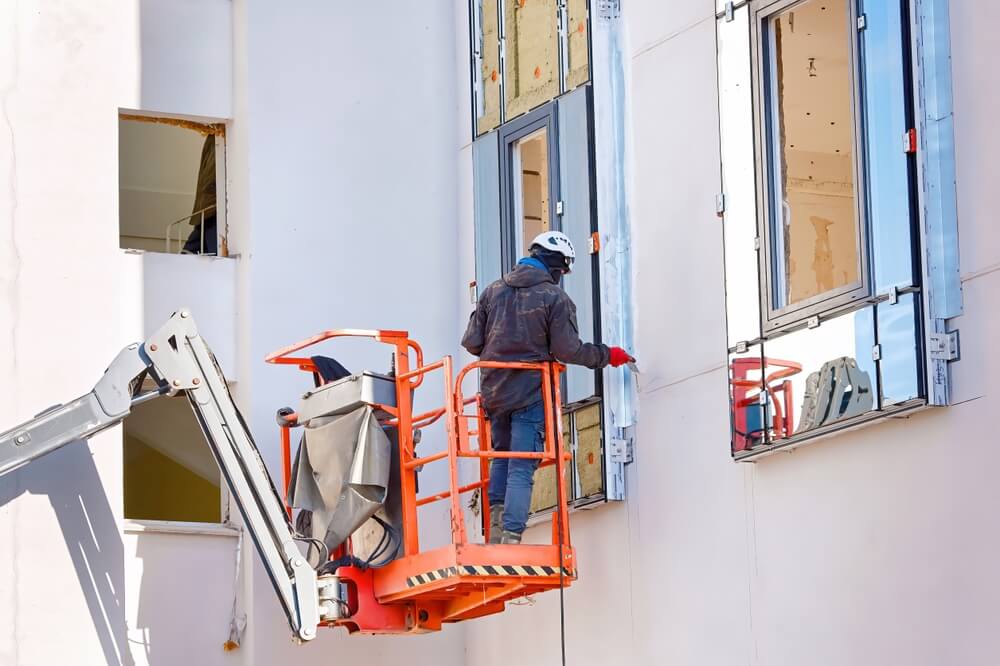
21 Sep Protecting Your Building Envelope: Why Proactive Exterior Maintenance Saves Millions
For commercial property owners and facility managers in Indianapolis, exterior deterioration rarely begins as a dramatic failure. It often starts with a small opening in a sealant joint, damaged masonry, deteriorating flashing, or a drainage problem that allows water to reach places it should not.
Proactive building envelope maintenance identifies and addresses those vulnerabilities before moisture intrusion spreads into insulation, interior finishes, structural components, or occupied spaces.
Quick answer: Proactive exterior maintenance protects a building envelope by finding and correcting small defects before they develop into larger water, structural, and operational problems. In Indianapolis, regular inspections are especially valuable because commercial buildings experience rain, snow, freezing temperatures, summer heat, and substantial seasonal temperature changes. Maintenance cannot eliminate every major repair, but it can help property owners control deterioration and plan repairs rather than react to emergencies.
What local property owners should know
- Building envelope maintenance includes monitoring exterior walls, masonry, joints, sealants, windows, doors, flashing, roof transitions, drainage components, and other points where weather can enter.
- Indianapolis receives precipitation throughout the year, so water-management defects can become recurring rather than isolated problems.
- Central Indiana’s winter freezing conditions can make existing cracks and moisture-related deterioration more significant over time.
- A small exterior defect can affect interior finishes, tenant spaces, insulation, and other building components if water continues moving through the assembly.
- Documented inspections help facility teams prioritize repairs and budget for exterior work before deterioration becomes urgent.
Why Does Building Envelope Maintenance Matter in Indianapolis?
Building envelope maintenance matters in Indianapolis because local commercial properties face four distinct seasons, regular precipitation, winter freezing, and warm summers, all of which place changing demands on exterior materials and joints.
National Weather Service climate normals for Indianapolis show about 43.63 inches of annual precipitation and 25.5 inches of snowfall. Average temperatures range from a January high of 36.1°F and low of 20.9°F to a July high of 85.2°F and low of 66.4°F. The average first freeze occurs in October, while the average last freeze occurs in April.
That seasonal range matters for buildings across Marion County. Sealants, masonry joints, coatings, flashing, windows, and transitions between different materials can experience repeated wetting, drying, heating, cooling, and freezing conditions.
From Downtown Indianapolis and the Regional Center to commercial corridors near Castleton, Broad Ripple, Keystone, and the I-465 loop, building age and construction type vary significantly. There is no single maintenance plan that fits every property.
Knauss Property Services, LLC helps property owners approach exterior maintenance as a planned part of protecting their facilities. From this point forward, our focus is simple: find exterior problems early, understand their extent, and address them before avoidable deterioration spreads.
What Does Local Climate Data Tell Property Managers?
Local climate data shows that Indianapolis building exteriors must manage moisture and substantial temperature changes throughout the year, making routine exterior observation and maintenance a practical part of facility planning.
National Weather Service normals show measurable precipitation in every month, with April, May, June, and July each averaging more than four inches. Normal snowfall is concentrated primarily between November and March.
Those numbers do not mean every building will develop envelope problems. They do explain why neglected openings can be consequential. Water that enters through a failed joint or damaged exterior component may remain concealed until staining, material deterioration, or interior damage becomes visible.
How Can Exterior Deterioration Affect an Indianapolis Property?
Exterior deterioration can affect an Indianapolis commercial property by allowing moisture into assemblies, accelerating material damage, disrupting occupied spaces, and turning manageable maintenance items into more extensive repairs.
Water does not always appear directly behind the point where it entered. It can travel along structural elements, behind cladding, around openings, or through wall assemblies before becoming visible indoors.
For offices Downtown, retail properties around Castleton, multifamily buildings, industrial facilities, and other Marion County properties, that creates another concern: disruption. A repair performed proactively can often be scheduled around normal operations. An active leak during severe weather offers far less flexibility.
What Are the Warning Signs of Building Envelope Problems?
Building envelope problems often reveal themselves through visible cracking, failed sealants, staining, loose materials, corrosion, or recurring interior moisture, and these signs should prompt closer investigation rather than cosmetic treatment alone.
Watch for:
- Cracked, separated, brittle, or missing sealant around exterior joints and openings
- Cracks, spalling, displacement, or staining on masonry surfaces
- Water stains near windows, doors, ceilings, or exterior walls
- Loose, damaged, or deteriorated exterior materials
- Corrosion around exposed metal components
- Failed flashing or visibly open transitions between building materials
- Recurring leaks that appear during wind-driven rain or snowmelt
- Efflorescence or other moisture-related deposits on masonry
A single symptom does not automatically identify the source. The goal is to determine why the condition is occurring before choosing the repair.
When Should You Call an Exterior Maintenance Professional?
A professional exterior assessment is appropriate when damage is recurring, elevated, widespread, difficult to trace, or involves components that cannot be safely evaluated from the ground.
Facility personnel can perform useful visual checks from accessible locations. They can document staining, note where leaks occur, photograph visible deterioration, and track whether a condition changes after storms.
DIY inspection should stop when accessing the area creates a fall hazard or when determining the moisture pathway requires specialized exterior evaluation. Commercial facades, elevated masonry, roof-to-wall transitions, and concealed water intrusion deserve a systematic approach.
What Commonly Causes Building Envelope Deterioration in Central Indiana?
Common building envelope deterioration in Central Indiana can result from moisture exposure, aging sealants, freeze-thaw conditions, movement between materials, drainage deficiencies, and deferred exterior maintenance.
Water exposure: Rain and melting snow test joints, penetrations, flashing, and drainage paths.
Aging sealants: Sealants eventually lose flexibility or adhesion, leaving gaps at joints and around penetrations.
Freezing conditions: Moisture already present in vulnerable materials can become more problematic as temperatures move above and below freezing.
Material movement: Different facade materials expand and contract differently as temperatures change.
Drainage problems: Water that is not directed away effectively may repeatedly wet masonry, walls, foundations, and transitions.
Deferred maintenance: A minor defect that remains exposed through multiple seasons can become a larger repair scope.
How Can Indianapolis Property Owners Prevent Exterior Damage?
Indianapolis property owners can reduce exterior deterioration by scheduling recurring visual inspections, correcting drainage problems, maintaining sealants and joints, and reviewing vulnerable areas after severe seasonal weather.
Spring is a useful time to look for winter damage. Fall provides another opportunity to address exterior openings before freezing conditions return. Properties can also benefit from inspections after significant storms or when occupants report new moisture.
A basic maintenance checklist should include facade joints, masonry, window and door perimeters, flashing, penetrations, parapets, visible drainage components, and transitions between different exterior systems.
Keep photographs and dated notes. Comparing conditions over time can help determine whether a crack is stable, a sealant joint is worsening, or staining is spreading.
What Results Should You Expect From Proactive Maintenance?
Proactive maintenance should provide better visibility into building conditions, earlier identification of defects, and a more manageable way to prioritize exterior repairs before they become emergencies.
It should not be viewed as a guarantee that a property will never leak or require major restoration. Buildings age, materials reach the end of their service lives, and severe weather can create new problems.
The advantage is information. Knowing that a section of sealant needs attention this season or that masonry repairs should enter next year’s capital plan gives an owner more control than discovering the problem through an interior leak.
What Exterior Maintenance Mistakes Should Property Managers Avoid?
The biggest exterior maintenance mistakes are treating symptoms instead of causes, delaying known repairs, and assuming that a building is watertight simply because no interior leak is currently visible.
Mistake: Painting over staining.
Consequence: The moisture source may remain active.
Better approach: Determine why the staining developed first.
Mistake: Repeatedly patching the same leak.
Consequence: The actual entry point may remain unresolved.
Better approach: Evaluate surrounding joints, transitions, and drainage paths.
Mistake: Waiting for interior damage.
Consequence: Exterior deterioration can progress before occupants notice it.
Better approach: Inspect the exterior proactively.
Mistake: Treating every crack identically.
Consequence: Different cracks can have different causes.
Better approach: Evaluate location, movement, material, and surrounding conditions before selecting a repair.
What Is a Common Indianapolis Commercial Property Scenario?
A common Indianapolis scenario is an aging commercial building that appears serviceable from the ground but has isolated sealant failures, masonry deterioration, or vulnerable transitions that become noticeable only after repeated weather exposure.
This is not a specific Knauss Property Services, LLC project or case study. It illustrates why inspection matters.
A property manager might first hear about a small water stain after heavy rain. Simply repairing the interior finish does not answer where the water entered. An exterior evaluation may identify several potential vulnerabilities that can then be prioritized based on condition and risk.
Which Services Help Protect a Building Envelope?
Building envelope services help protect commercial properties by identifying exterior vulnerabilities and completing appropriate maintenance or repair work before those conditions contribute to more extensive deterioration.
Depending on the building and observed conditions, the appropriate solution may involve exterior inspection, joint or sealant maintenance, masonry-related repairs, waterproofing-related work, or other exterior maintenance.
The exact repair should follow the condition rather than a predetermined solution.
Ready to understand what your building exterior needs?
How Do Proactive Maintenance and Emergency Repairs Compare?
Proactive maintenance gives property managers more opportunity to inspect, prioritize, budget, and schedule work, while emergency repairs occur after an active problem has already created an immediate operational concern.
Planned maintenance allows multiple exterior conditions to be reviewed together. Emergency service is appropriate when active water intrusion or a potentially unsafe exterior condition requires immediate attention.
For many Indianapolis facility teams, the strongest strategy is not choosing one forever. It is using routine maintenance to reduce preventable emergencies while maintaining a response plan for unexpected conditions.
What Areas Can Benefit From Commercial Exterior Maintenance?
Commercial properties throughout Indianapolis and surrounding Central Indiana communities can benefit from regular exterior maintenance, particularly buildings exposed to decades of seasonal weather or showing visible signs of facade deterioration.
Properties in Marion County and nearby communities such as Carmel, Fishers, Greenwood, and Plainfield experience many of the same regional weather patterns, although every building should be evaluated according to its construction and actual condition.
What Can Happen When Exterior Maintenance Is Deferred?
Deferred exterior maintenance can allow small defects to expand into larger repair scopes, particularly when water repeatedly reaches vulnerable building materials through multiple Indianapolis seasons.
The cost is not limited to the exterior repair itself. Depending on where moisture travels, owners may also face damaged interior finishes, interrupted tenant spaces, wet insulation, or repairs to adjacent components.
Early maintenance is therefore less about predicting a specific dollar amount and more about controlling exposure and avoiding unnecessary escalation.
Reduce the risk of preventable exterior damage
FAQ
How often should commercial buildings in Indianapolis be inspected?
Commercial buildings in Indianapolis should be inspected on a recurring schedule based on age, construction, exposure, and known conditions. Seasonal visual reviews can be useful, particularly after winter and severe storms. Buildings with previous leaks or known facade deterioration may require more frequent professional attention.
Why are freeze-thaw conditions important for Indianapolis buildings?
Freeze-thaw conditions matter because moisture can enter cracks or porous exterior materials before temperatures fall below freezing. Indianapolis normally experiences freezing weather during the colder months, so keeping water out of vulnerable assemblies and addressing deterioration before winter can be an important maintenance priority.
Does a small masonry crack always mean there is a serious problem?
No. A small masonry crack does not automatically indicate a serious structural problem, but its cause, location, width, pattern, and whether it is changing should be considered. Property managers should document cracks and seek professional evaluation when cracking progresses, recurs after repair, or accompanies displacement or water intrusion.
Why does sealant maintenance matter in Central Indiana?
Sealant maintenance matters because joints help accommodate movement while limiting water entry at transitions and openings. Central Indiana buildings experience significant seasonal temperature changes, precipitation, and freezing conditions. Cracked, separated, or brittle sealant should be evaluated before moisture gains an easier path into the assembly.
Should Indianapolis property managers inspect buildings before winter?
Yes. A pre-winter exterior review can identify open joints, damaged sealants, drainage issues, masonry deterioration, and other conditions before freezing weather arrives. National Weather Service data places the average first Indianapolis freeze in October, making late summer or early fall a practical period for exterior planning.
Can building envelope maintenance prevent every leak?
No. Building envelope maintenance cannot guarantee that a commercial property will never experience a leak. It can identify visible vulnerabilities, support timely repairs, and reduce avoidable exposure. Severe weather, concealed defects, material failures, and unexpected damage can still create moisture problems.
Is exterior maintenance only necessary for older Indianapolis buildings?
No. Older buildings may have more age-related deterioration, but newer properties also require exterior maintenance. Sealants, joints, coatings, flashing, drainage components, and penetrations remain exposed to weather regardless of building age. Maintenance should be based on actual condition, materials, exposure, and manufacturer or design requirements.
Why document exterior inspections?
Documenting exterior inspections creates a condition history that helps Indianapolis facility managers track changes and plan repairs. Photographs, dates, locations, and notes make it easier to compare cracks, sealant deterioration, staining, and other conditions from one inspection to the next and prioritize maintenance accordingly.
Protecting a commercial building envelope is an ongoing process, not a one-time repair. For Indianapolis property owners, proactive exterior maintenance provides an opportunity to find vulnerabilities earlier, plan work strategically, and protect occupied spaces through Central Indiana’s changing seasons.
Protect Your Indianapolis Property Before Small Exterior Problems Grow
A proactive exterior maintenance plan can give you a clearer picture of your building’s condition and help you address deterioration on a planned schedule.